



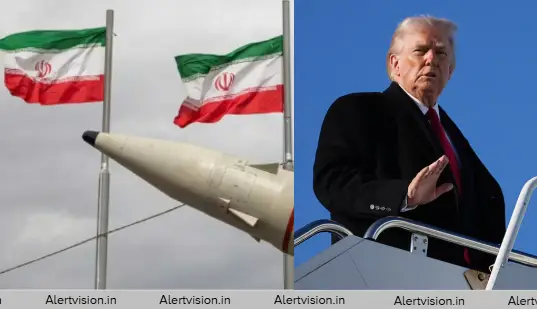
Iran Nuclear Program Tensions Rise as U.S. Boosts Military Presence
The president of the United States states that “there are people” but does not specify who he wants to rule Iran.
Rising tensions surrounding the Iran Nuclear Program have intensified as the United States accelerates military deployment in the Middle East, sending additional naval and air assets to reinforce regional deterrence. The move reflects Washington’s strategy as the U.S. boosts military presence while negotiations continue over Tehran’s nuclear activities and regional security concerns. At the same time, Donald Trump stated that a leadership change could be the “best outcome for Iran,” linking diplomatic pressure with military readiness and signaling that both negotiation and force remain possible paths as tensions escalate.
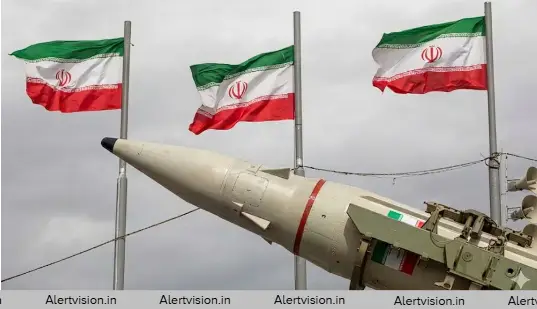
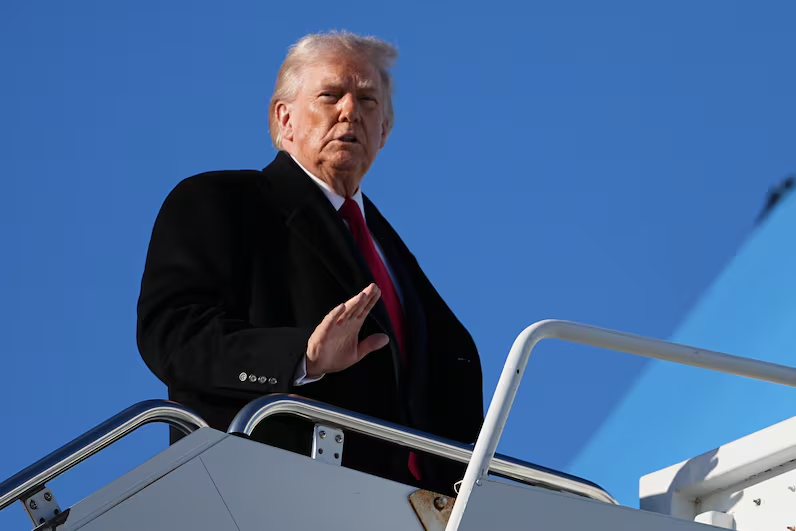
As the Pentagon sent a second aircraft carrier to the Middle East on Friday, U.S. President Donald Trump indicated his support for overthrowing Iran’s leadership and said that “tremendous power” will soon be present in the region.
The Trump administration’s aggressive rhetoric and military actions coincide with efforts by Tehran and Washington to reestablish diplomatic relations amid Tehran’s protracted nuclear conflict with the West.
U.S. envoys Steve Witkoff and Jared Kushner will negotiate with Iran on Tuesday in Geneva, with mediators from Oman serving as the parties, a person knowledgeable on the subject told Reuters. According to the source, as part of the U.S. effort to stop the war in Ukraine, the two will also meet with representatives from Russia and Ukraine there on the same day.
Trump said that it “seems like that would be the best thing that could happen” when asked if he wanted the Iranian regime to change. Although he wouldn’t say who he wanted to rule Iran, he did say “there are people.””They’ve been talking and talking and talking for 47 years,” Trump remarked after a military gathering at Fort Bragg, North Carolina.
“We have lost many lives while they are speaking in the interim. The faces, limbs, and legs were blasted off. We’ve been doing this for a while.
Washington wants to discuss Iran’s ballistic missiles, assistance for armed organizations in the area, and treatment of the Iranian people in nuclear negotiations. Iran has denied that the problem is related to missiles, but it has stated that it is willing to talk about reducing its nuclear program in return for the easing of sanctions.
As the United States gathers forces in the Middle East, Trump has warned to strike Iran if an agreement cannot be reached, and Tehran has promised to react, escalating worries of a broader conflict. Last year, the United States launched strikes on Iran’s nuclear facilities.
In response to a question about what remained to be targeted at the nuclear installations, Trump gave the response “dust.” He added: “If we do it, that would be the least of the mission, but we probably grab whatever is left.”
Increased American presence
U.S. officials from the United States Navy described the relocation of military assets as a highly coordinated logistical operation involving multiple commands, supply routes, and operational timelines. The aircraft carrier Gerald R. Ford is expected to reinforce the carrier Abraham Lincoln, creating a dual-carrier presence designed to expand airpower, surveillance capability, and rapid-response readiness across the Middle East.
Such deployments require advance positioning of escort vessels, aerial refueling support, and intelligence systems to ensure continuous operational coverage during transit and after arrival. Alongside the carriers, guided-missile destroyers equipped with air defense and missile interception systems have been moved into strategic waters, while fighter jets and surveillance aircraft provide reconnaissance, early-warning detection, and strike capability. Officials noted that combining naval aviation with regional air assets allows U.S. forces to maintain persistent monitoring of potential threats while signaling deterrence without immediate engagement.
With her escort ships, the Gerald R. Ford, the biggest carrier in the world and the newest in the United States, has been conducting operations in the Caribbean and participated in operations in Venezuela earlier this year.
Trump responded, “In case we don’t make a deal, we’ll need it… if we need it, we’ll have it ready,” when asked earlier Friday why a second aircraft carrier was en route to the Middle East.
The carrier would take at least a week to get to the Middle East, according to one of the officials who spoke on condition of anonymity.
When the United States conducted strikes against Iranian nuclear targets in June of last year, it had two aircraft carriers in the region.
The U.S. Navy has just 11 aircraft carriers, making them a limited resource. Their timetables are often predetermined.
Overseeing U.S. military operations in Latin America, U.S. Southern Command issued a statement stating that it will remain committed to combating “illicit activities and malign actors in the Western Hemisphere.”
Since June 2025, the Ford has practically remained at sea. Prior to its sudden relocation to the Caribbean in November, it was scheduled to operate in Europe.
Although carrier deployments typically last nine months, they are sometimes prolonged during times of heightened U.S. military action.
Long-term deployments at sea have been known to lower ship morale, according to Navy authorities.According to officials, the government had considered deploying the Bush, a different carrier, to the Middle East, but it was still getting certification and would take more than a month to get there.
More than 75 military aircraft, including fighters like the F-18 Super Hornet jet and the E-2 Hawkeye, which can serve as an early warning system, can fit inside the nuclear-powered Ford.
Additionally, the Ford features advanced radar that aids in navigation and air traffic management.
Surface-to-air, surface-to-surface, and anti-submarine warfare capabilities are possessed by the supporting vessels, which include the Arleigh Burke-class guided-missile destroyers Thomas Hudner, Ramage, Carney, and Roosevelt, as well as the Ticonderoga-class guided-missile cruiser Normandy.
The remarks by Donald Trump come at a sensitive moment for relations between the United States and Iran, where diplomatic engagement and military deterrence are unfolding simultaneously. Analysts note that Washington’s increased naval deployments are intended to signal strategic readiness while maintaining pressure during negotiations over Tehran’s nuclear activities and regional influence.
Experts warn that rhetoric surrounding regime change could complicate ongoing diplomatic efforts, particularly as talks involving international mediators are expected to address sanctions relief, nuclear limitations, and regional security concerns. The negotiations scheduled in Geneva are viewed as a critical opportunity to prevent further escalation, though both sides remain deeply divided on missile programs and security guarantees.
Meanwhile, regional allies are closely monitoring developments, fearing that any miscalculation could trigger broader instability across the Middle East. Military analysts emphasize that aircraft carrier deployments are often used as strategic leverage rather than immediate preparation for conflict, but the heightened military posture has nevertheless increased global concern about the risk of confrontation.